



Lutron Window Shades: Smart Setup and Planning Guide
by Yuvien Royer on Jun 02 2025
Automating natural daylight changes how a home feels throughout the day. When you want daylight control without constant manual adjustments, investing in automated coverings makes immediate sense. However, planning an automated setup requires balancing your power wiring, fabric choices, and bracket hardware across various openings.
Choosing Lutron Window Shades for Your Layout
Homeowners exploring smart treatments often turn to lutron window shades because of their dependable radio frequencies and smooth motor alignment. Getting the right fit starts with understanding how the hardware lives inside your physical space. Whether you are outfitting a busy kitchen, a media room, or quiet bedrooms, you must account for casing depth, power accessibility, and control preferences.
For smaller openings or tight bathroom recesses, review our window shades guide reference before purchasing hardware. Similarly, checking our window shades guide walkthrough helps you avoid clearance surprises when placing brackets in compact structural jambs.
Power Architecture: Wireless Batteries Versus Wired Lines
The primary technical decision in any motorized shading project is deciding how your motors receive power. The selected method dictates your installation complexity, long-term battery life management, and wall prep.
Battery-Powered Wireless Configurations
Battery options work well for finished homes where cutting into drywall is out of the question. Battery packs sit securely inside the headrail casing. Everyday convenience depends on expected battery life, which changes based on how often you cycle the fabric and how cold the glass gets in winter.
These battery-operated versions let people add automated coverings to finished rooms without calling an electrician. You install the mounting brackets, insert the recommended power cells, click the casing into position, and pair the device to your controls.
Wired Infrastructure for Renovations
If you are undertaking a major remodel or building fresh, a hardwired setup is significantly more permanent. Pulling low-voltage wired lines directly to the upper corners of window casings allows motors to run directly from a central panel.
- Eliminates ongoing battery swaps in hard-to-reach locations.
- Enables a wired hub setup with uninterrupted power delivery.
- Accommodates large glass expanses where heavy fabrics demand continuous wired current.
- Provides a clean, streamlined look without battery compartments.
For custom casings that fall between standard dimensions, consult our window shades guide to see how depth clearances differ when routing a wired run through the framing.
Selecting Styles: Motorized Roller Shades and Insulated Fabrics
Once power is addressed, you can select fabrics and design profiles that match your architectural style.
Motorized Roller Shades
Modern architectural builds often favor sleek roller shades. These roller shades lift cleanly into a minimal cassette, keeping glass unobstructed so you can enjoy the outside view. When choosing roller shades, pay close attention to openness factors. A tighter weave protects your floors from harsh rays, while an open weave lets daylight illuminate the interior without blinding glare.
When working with medium-width window sizes, pairing your motorized roller shades with precision edge hardware reduces side gaps. Our window shades guide explains how to limit peripheral light leaks in media rooms and sleeping areas.
Cellular and Insulating Profiles
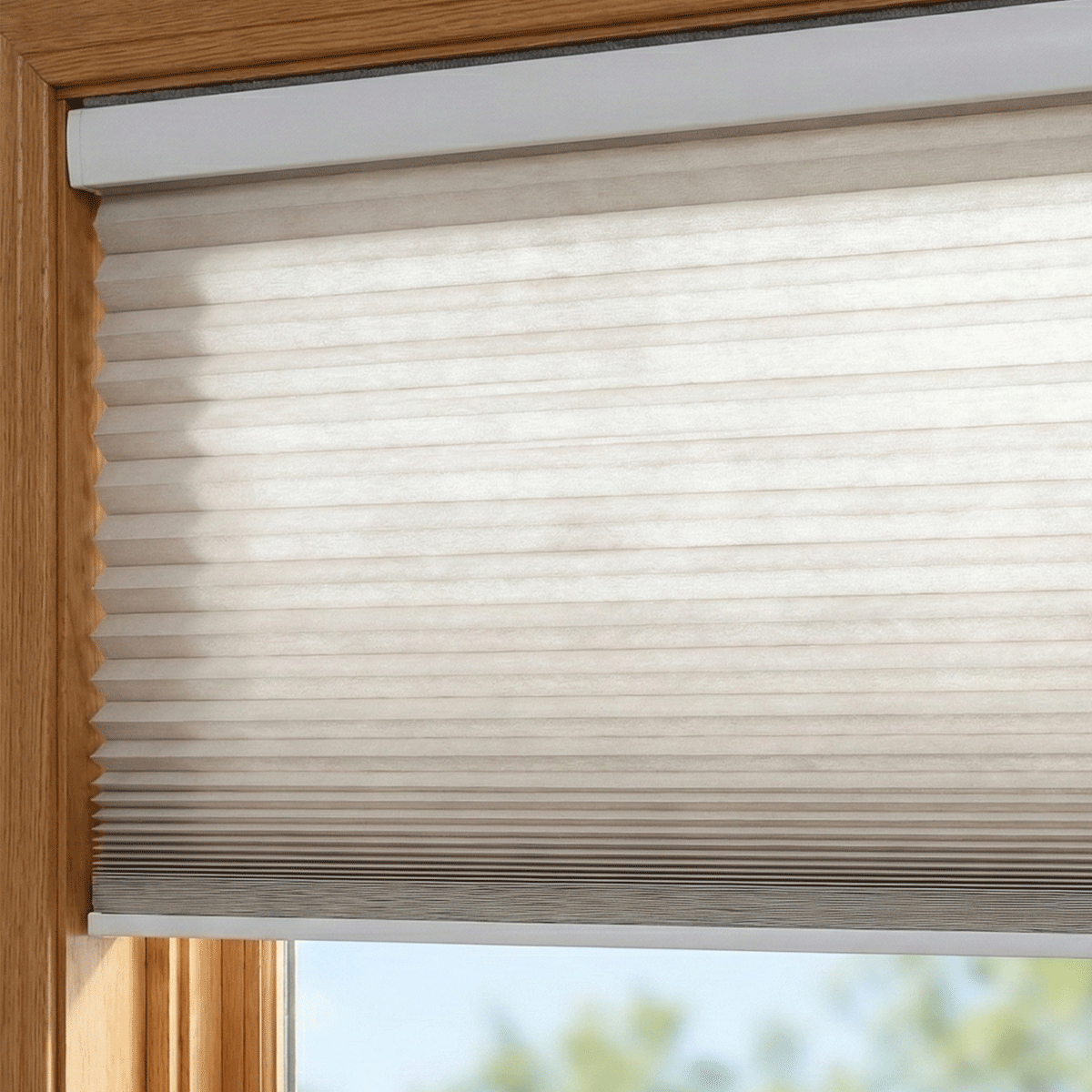
In regions with intense seasons, cellular fabrics create an insulating air barrier directly against the glass. These honeycomb air pockets slow thermal transfer, helping indoor spaces stay temperate. They compress tightly into the top bracket when raised, keeping the upper window glass open to incoming sun on cool mornings.
Smart Home Integration and Hub Linking
Automated treatments truly shine when paired with reliable ecosystem bridges and wall switches. With a dedicated smart bridge wired directly to your network router, shades connect smoothly without congesting your household Wi-Fi bandwidth.
- Hub pairing: Pressing the programming toggle on the motor housing links the device to your smart control application.
- Physical switches: Wall-mounted Pico wireless controls let guests and family members adjust shade positions with a simple click.
- Automated schedules: You can program shades to close automatically at dusk for privacy or open gradually at sunrise.
If you need precision mounting details for intermediate window openings, explore our window shades guide overview for step-by-step bracket spacing advice.
Purchasing Considerations and Sizing Advice
Homeowners often ask: what shades work with Lutron systems, and why can automated treatments feel like a major investment? The premium stems from precision motors, dependable radio protocols, and durable build quality. Before committing, keep these essential steps in mind:
- Obtain an accurate quote: Request a detailed quote covering both the hardware profiles and any required power panels or bridges.
- Verify jamb depth: Confirm that your window trim has adequate depth for inside mounting, or plan for an outside casing mount.
- Measure at multiple points: Take measurements across the top, middle, and bottom of the casing, using the narrowest dimension for an inside mount.
- Check level: Use a digital or laser level so fabric stays centered on the roller tube without drifting off track.
In my own home setup, taking the time to square the mounting brackets saved hours of fabric adjustments later on. When properly measured, powered, and integrated, automated window treatments provide effortless comfort and a beautiful finish across every room.